Building Stellar
Designing a cross-platform event system for livestreaming, ticketing, and fan engagement across web, mobile, and OTT.
Overview
Stellar was born during the height of COVID, when the live entertainment industry was in crisis. In-person events were shut down and the demand for virtual experiences was surging. Stellar set out to bridge the gap between artists, venues, and fans by building a platform that let events continue in the digital space.
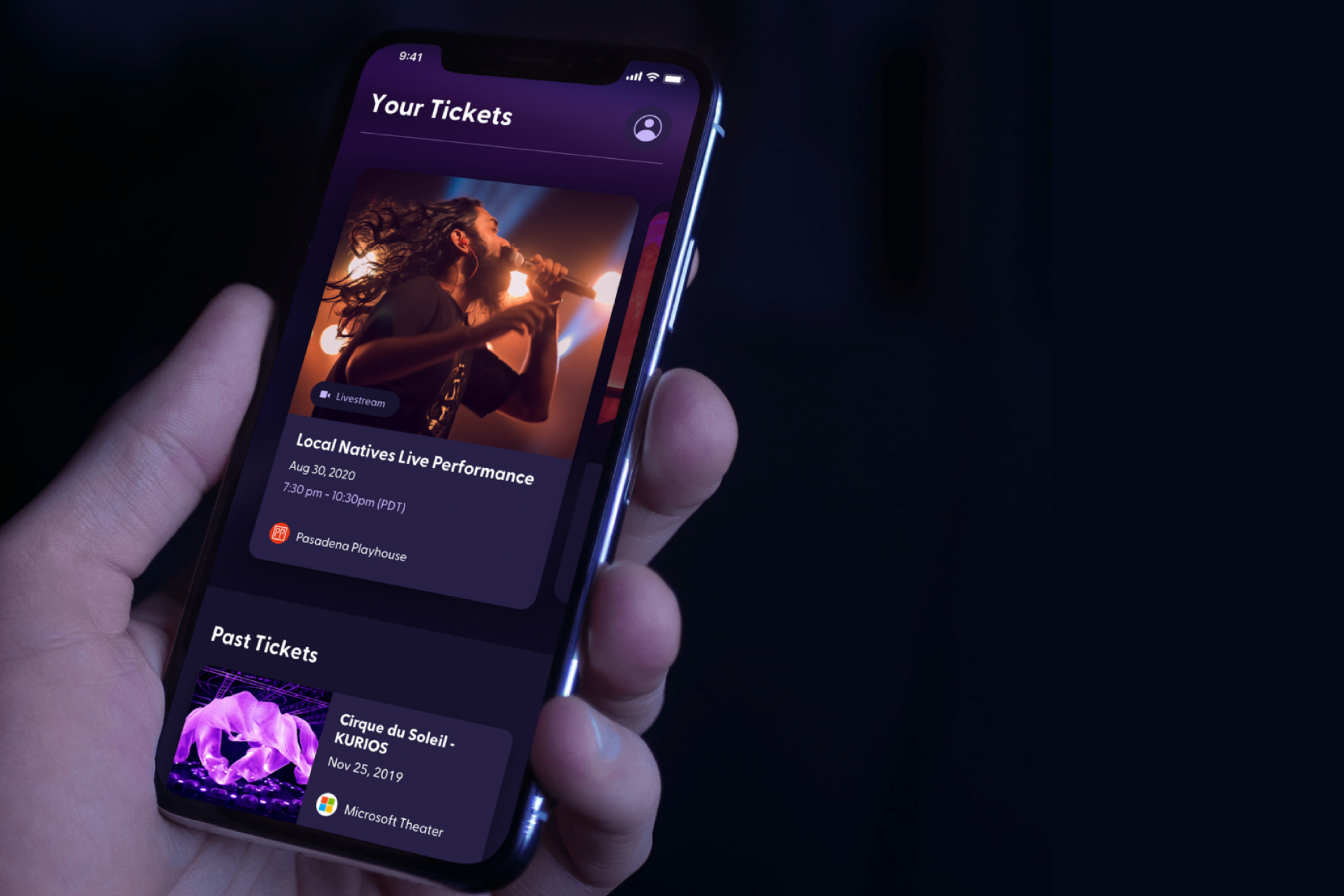
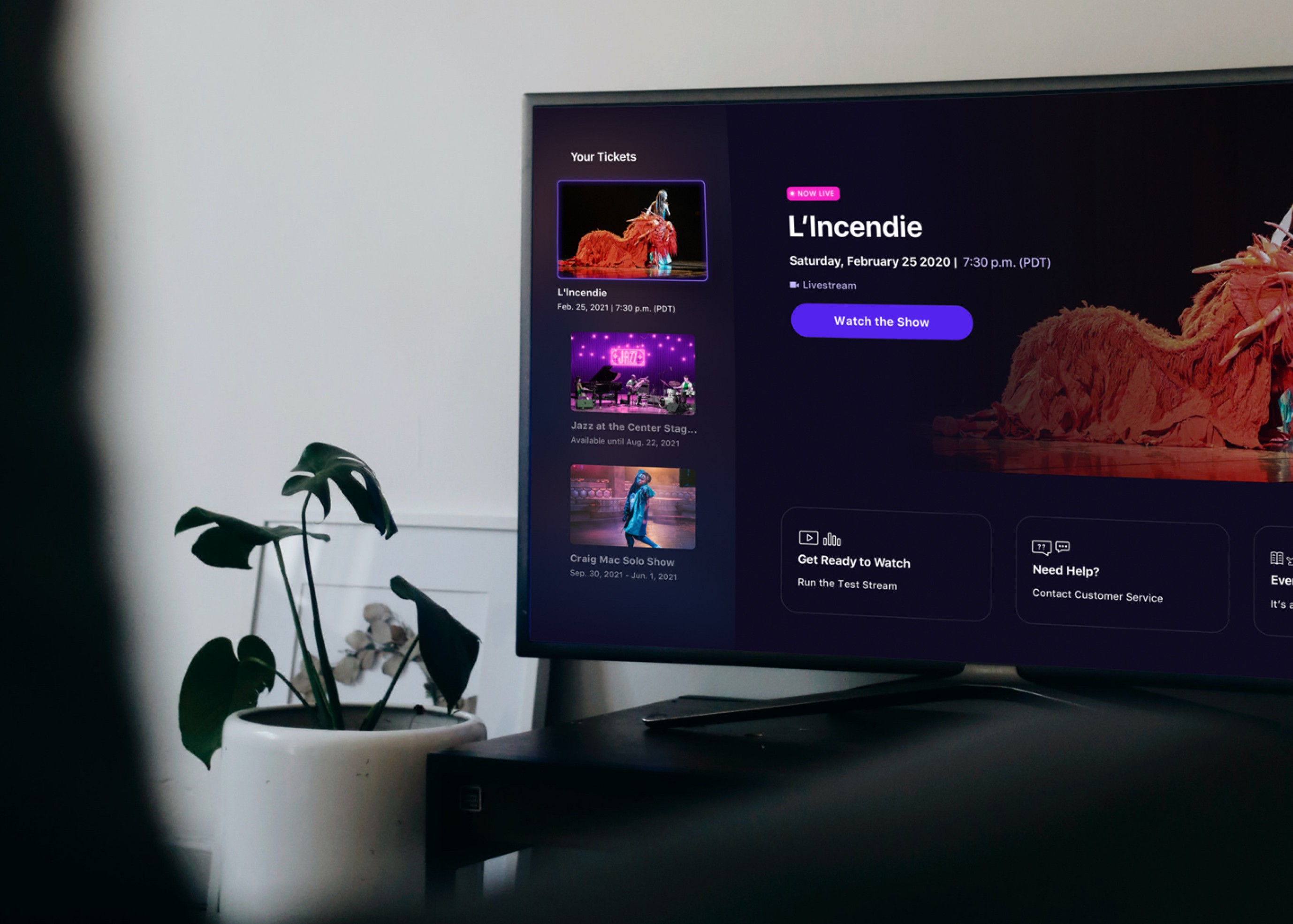
The platform is a total show management system that lets event organizers create and manage events, sell tickets and merch through a customizable checkout, livestream to global audiences across web, native, and OTT, and engage with fans in real time through a dual-screen experience — watch on one device, interact via chat on another. What started as a response to the pandemic has become a long-term solution for hybrid and virtual live events.
The Problem
As a new product built for a disrupted industry, Stellar had a lot to figure out at once:
- Cross-platform consistency: Events were streaming across web, mobile, and OTT (tvOS, Fire TV, Roku, LG), and the experience needed to feel unified across all of them.
- Custom branding for organizers: To make the platform attractive to artists and venues, the interface had to be highly customizable per brand while keeping Stellar's core functionality intact.
- Checkout optimization: A lot of users were funneling in from external artist and venue sites, so the path from discovery to ticket purchase had to be as frictionless as possible.
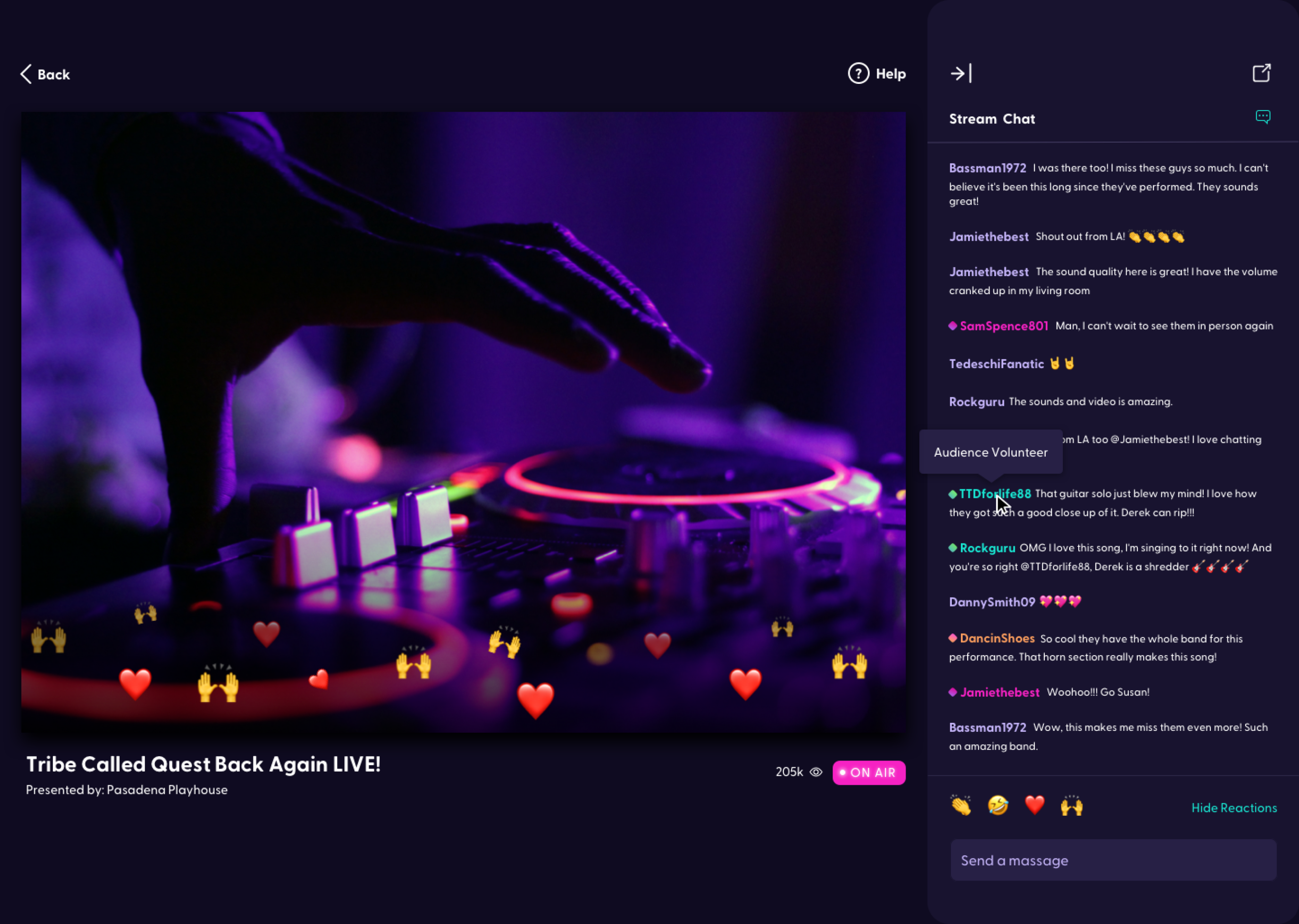
- Dual-screen interaction: Letting users watch on their TV while chatting on their phone or laptop was a compelling idea, but it needed seamless sync and a distraction-free interface to actually work.
The Approach
We began with extensive research into the live entertainment and streaming landscape, analyzing competitors and identifying gaps in the market. This research informed our product strategy and helped us understand the unique needs of artists, venues, and fans during the pandemic shift to virtual events.
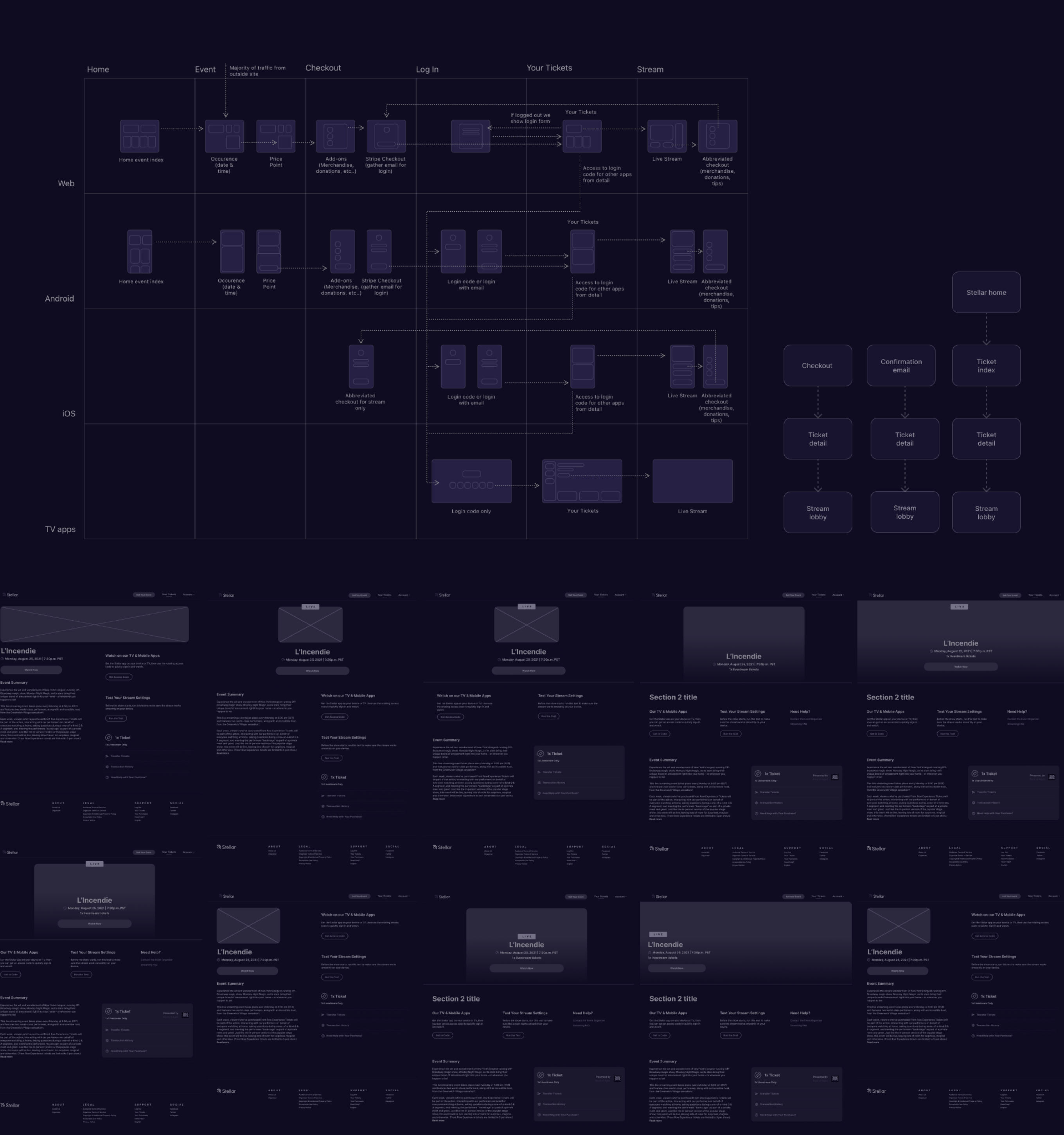
With events being streamed across web, mobile, and OTT platforms, we designed a unified experience that maintained consistency across all devices. Our responsive design system ensured that whether users were on their phone, laptop, or smart TV, the experience felt native and intuitive.
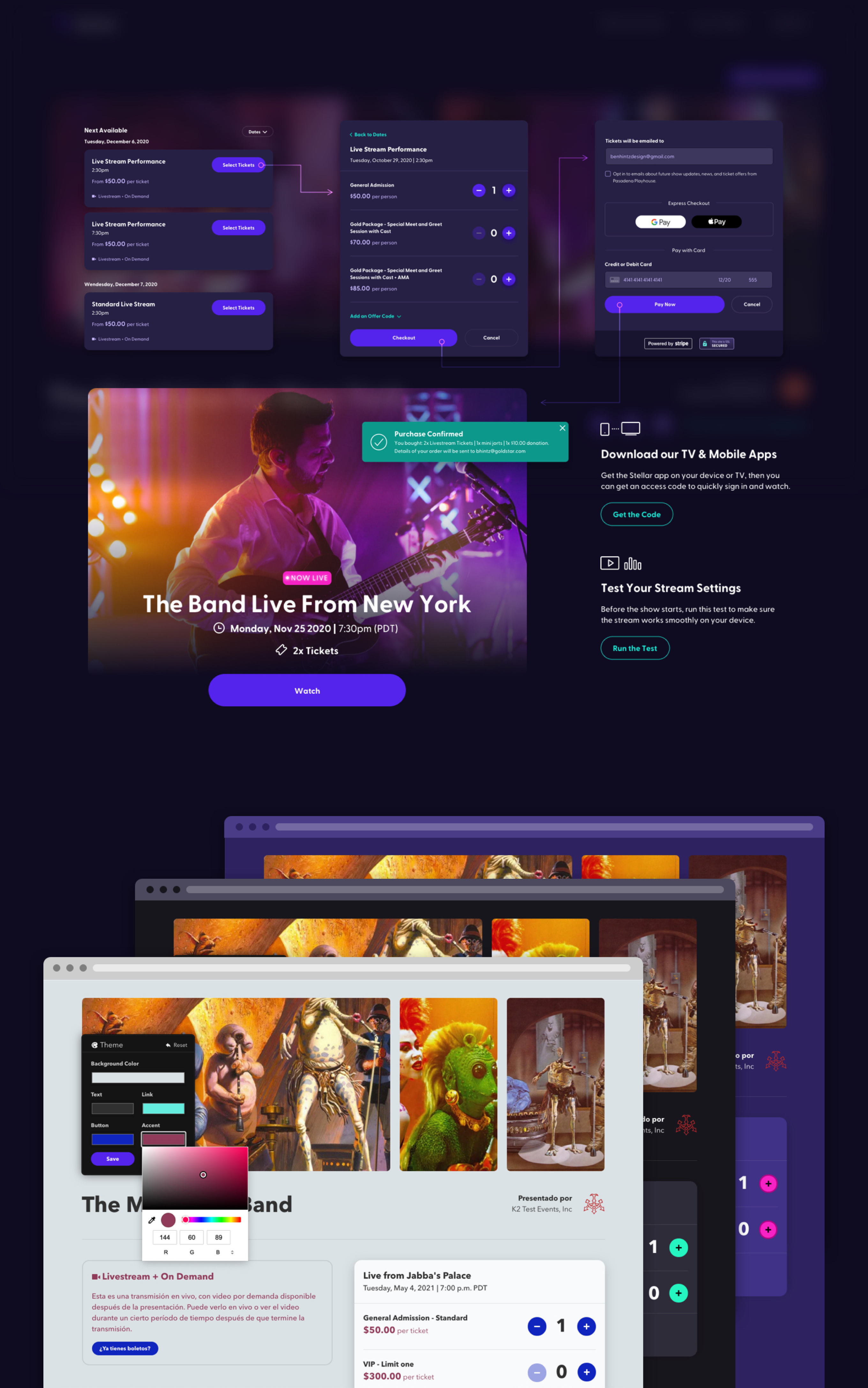
We created a modular theming system that allowed event organizers to fully customize their event pages with their own branding — colors, logos, imagery — while preserving Stellar's core functionality and user experience patterns.
Since many users funneled into Stellar from external artist and venue websites, we designed a checkout process that minimized friction. The streamlined flow kept the path from event discovery to ticket purchase clear and straightforward, reducing drop-off rates significantly.
We designed an innovative dual-screen experience that allowed users to watch events on their TV while chatting on their phone or laptop. This required seamless device synchronization and a distraction-free interface that kept the focus on the live event.
Barriers
- Cross-platform sync: The biggest challenge was letting users move between devices without disrupting their experience. We solved it with a post-purchase login code system that let users quickly sync devices and keep watching without hassle.
- Customizability without complexity: Giving organizers full control over branding without making setup overwhelming required a careful balance. We built a modular design system that made it easy to customize key elements while keeping the overall structure stable.
- Dual-screen usability: The dual-screen experience had to be intuitive out of the box. We implemented real-time chat sync and kept the chat interface non-intrusive so users could engage without getting pulled away from the main event.
Outcome
Stellar gained traction quickly as a comprehensive solution for live entertainment, now operating across web, native, and OTT. The frictionless checkout drove higher conversion rates, and organizers leaned hard into the branding customization — artists and venues used it to create fully on-brand event experiences. The dual-screen feature became a standout, giving fans a new way to engage from home. As the platform continues to grow, we're pulling from user research and customer service insights to keep iterating, with plans to expand into more interactive tools and deeper social media integration.