
Lilly 3.0
Leading the design system behind Lilly's brand shift, unifying 100+ digital products across public, DTC, brand, and internal surfaces.
Overview
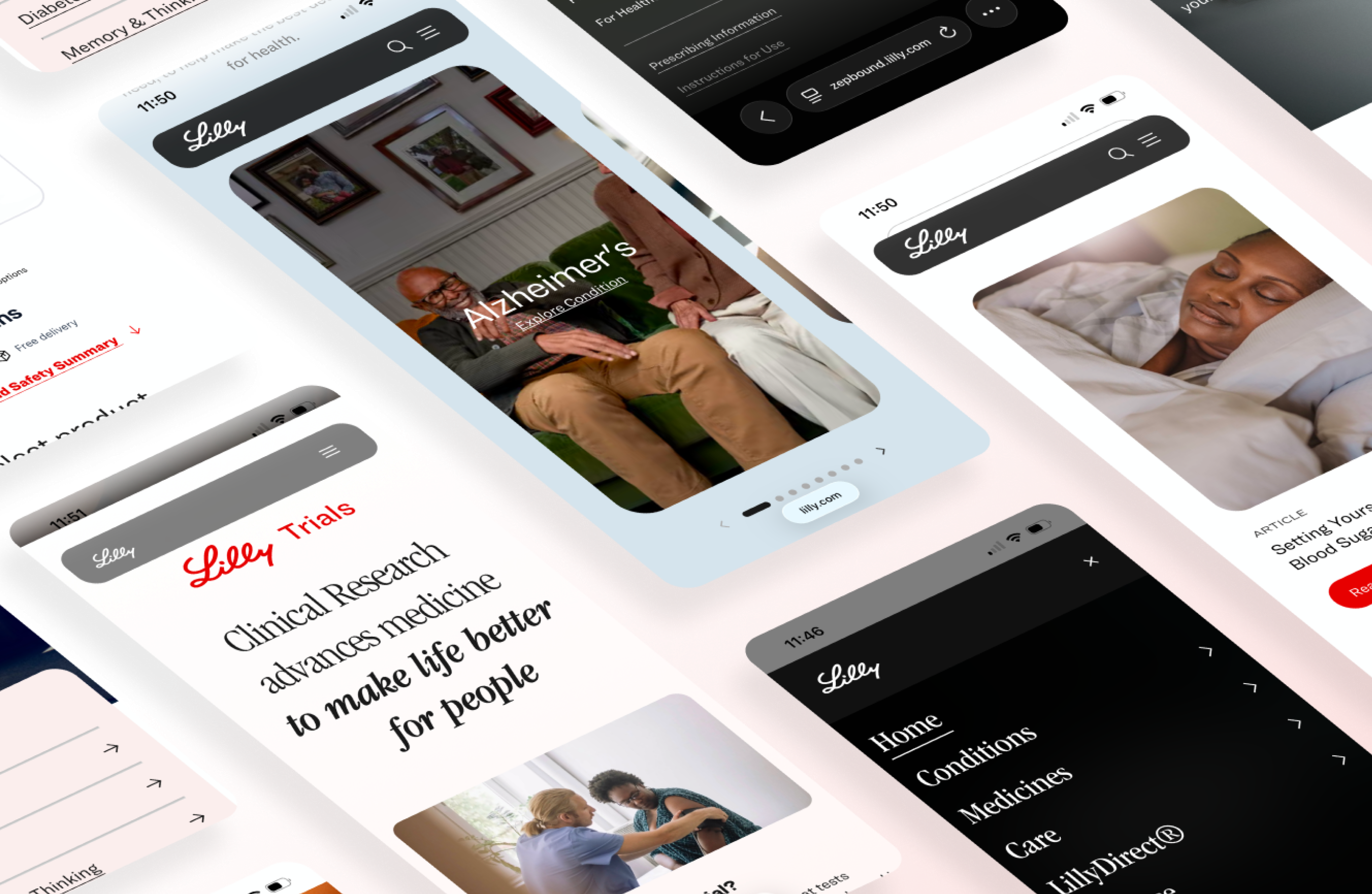
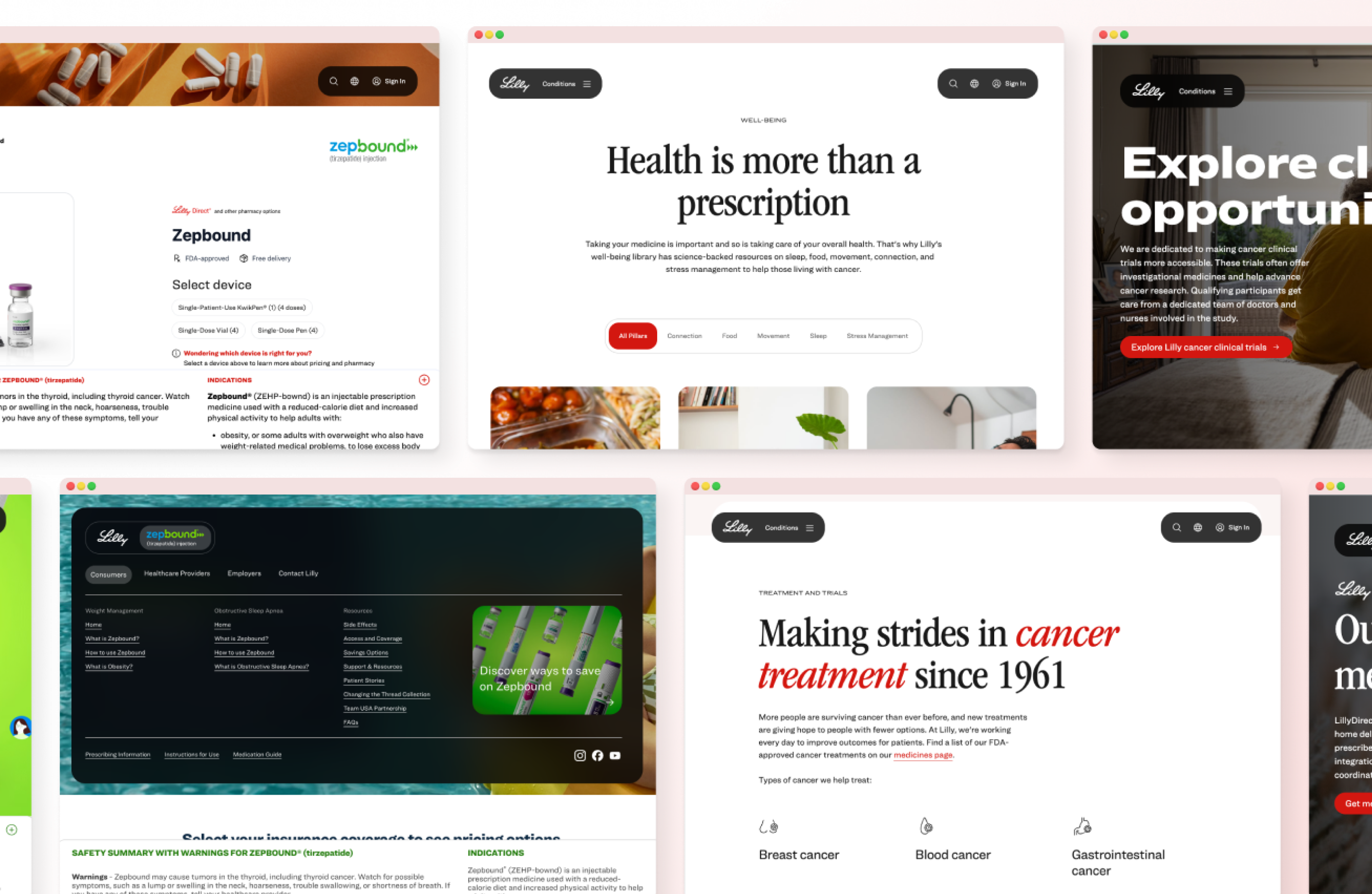
I was brought in through an agency partnership as design systems lead for Eli Lilly's LDS 3.0 initiative — the largest design overhaul I've been part of. Lilly was making a major strategic shift: moving from individual brands driving awareness (like zepbound.com) to Lilly as the parent brand driving the brands (zepbound.lilly.com). That meant every consumer-facing surface needed to change — the public site, a new direct-to-consumer site, 50+ external brand sites, and 50+ internal product tools. My role was to lead the design system that would make that transformation consistent, accessible, and scalable across all of it.
The Problem
Lilly's digital presence was fragmented. Every brand operated on its own, which meant inconsistent experiences across dozens of consumer-facing sites and internal tools. With the shift to a Lilly-led identity, they needed a unified system that could scale across every digital surface — public, DTC, brand, and internal — while still meeting the accessibility and regulatory requirements that come with being a Fortune 100 pharma company. The scope was massive: 100+ products needed to be touched, and there was no existing framework to prioritize, review, and roll out components at that scale.
The Approach
I led the design system effort alongside a cross-functional team that spanned two countries. The work moved through several key phases:
I managed a team of 7–8 designers split between the US and India, operating at a roughly 70/30 management-to-IC split. I was the bottleneck by design — every component and pattern flowed through me for quality, accessibility, regulatory compliance, and brand consistency. This structure ensured that nothing shipped without meeting the standards required across pharma, consumer, and internal contexts.
I partnered with Jeff Howell's incubation team to explore concepts at the page and recipe level — thinking holistically about how surfaces should look and feel before breaking anything down. From those explorations, we extracted reusable components that could scale across the full ecosystem of sites and tools.
Each component went through a rigorous review cycle before being handed off for build: accessibility reviews to meet WCAG and pharma-specific requirements, regulatory reviews to ensure compliance with FDA and legal standards, content reviews for clarity and tone, and design system reviews for consistency and reusability. This process ensured every component was production-ready across all contexts before a single line of code was written.
With 100+ surfaces to support, scope management was critical. I created a prioritization framework — must-have, important, and nice-to-have — that allowed us to sequence work across teams and surfaces without losing momentum or quality. This framework became the shared language between design, engineering, and stakeholders for making tradeoff decisions.
I authored the motion guidelines for LDS 3.0, defining how animation and transitions would behave across the system. These guidelines were adopted globally across all Lilly digital surfaces, bringing a layer of polish and consistency that helped the brand feel less pharmaceutical and more like a modern consumer experience.
Challenges
Regulatory complexity at scale was the biggest hurdle. This wasn't a typical consumer redesign — every component had to satisfy FDA compliance, accessibility standards, and brand guidelines at the same time. And that review process had to work across a distributed team in two countries. Balancing the speed needed to touch 100+ products with the rigor pharma demands took constant communication and prioritization. The time zone split also meant I had to design workflows that kept things moving without cutting corners on review quality.
Outcome
LDS 3.0 shifted Lilly's digital presence from feeling pharmaceutical to feeling like a modern consumer brand — across every surface. The system touched 100+ products spanning public sites, a new DTC platform, 50+ brand sites, and 50+ internal tools. The motion guidelines I created were adopted globally, and the component library and review process gave Lilly's internal teams a scalable foundation to keep building on. This was the biggest systems project I've led — enterprise scale at a Fortune 100, navigating pharma regulations while pushing for a consumer-grade experience.