Loyalty & Engagement
Building the system and product infrastructure behind white-label experiences for major sports and enterprise brands.
Overview
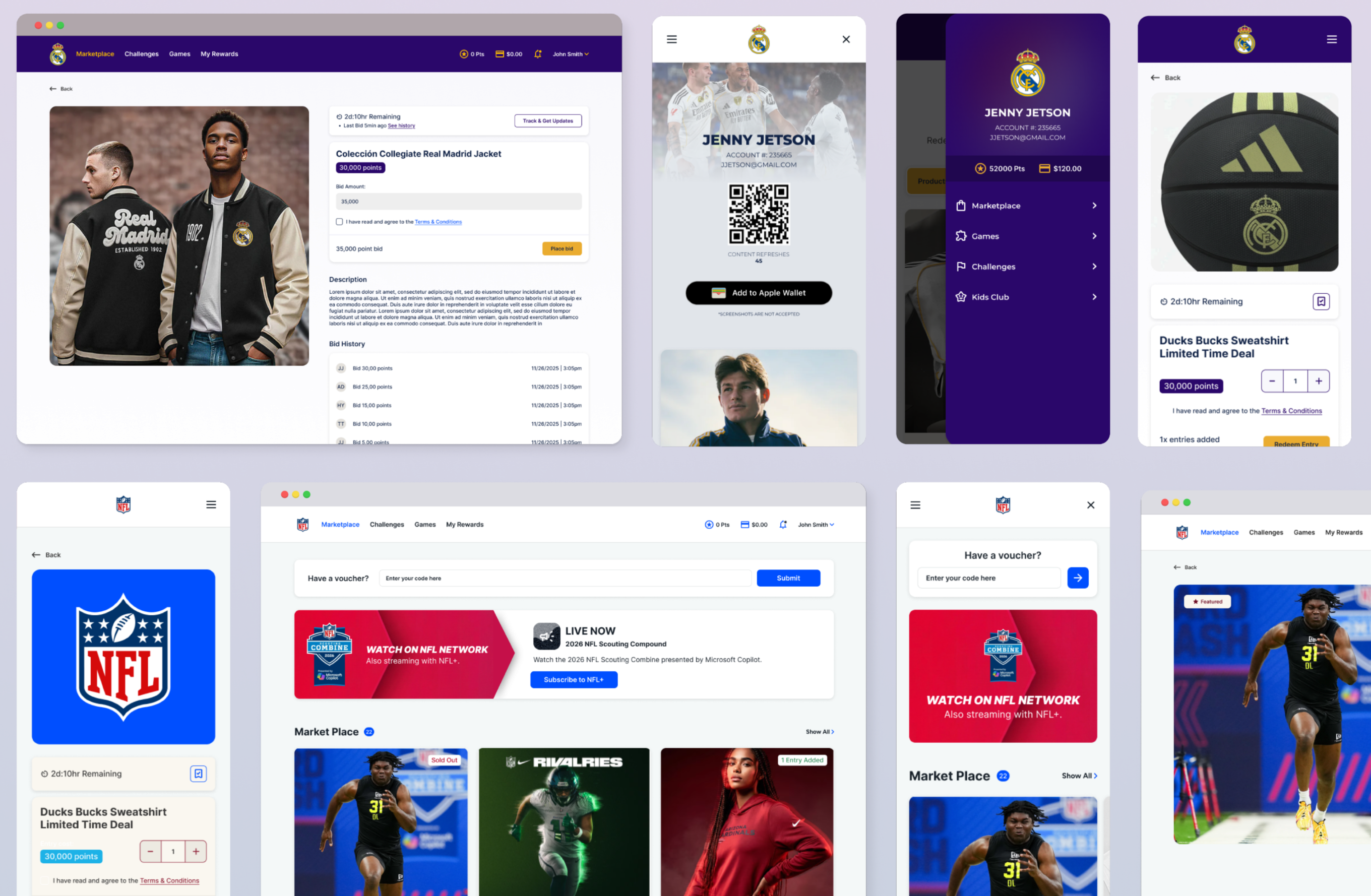
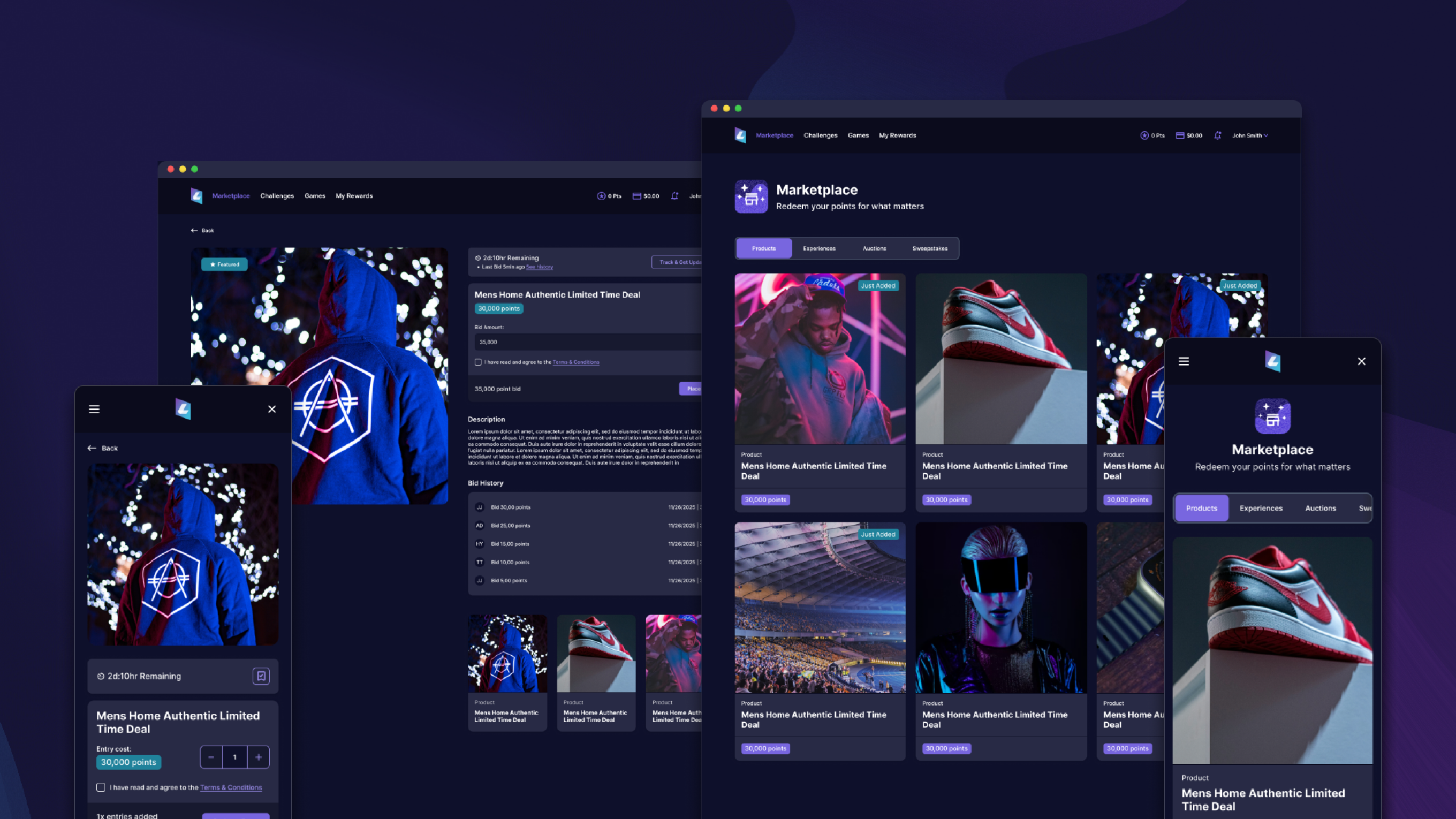
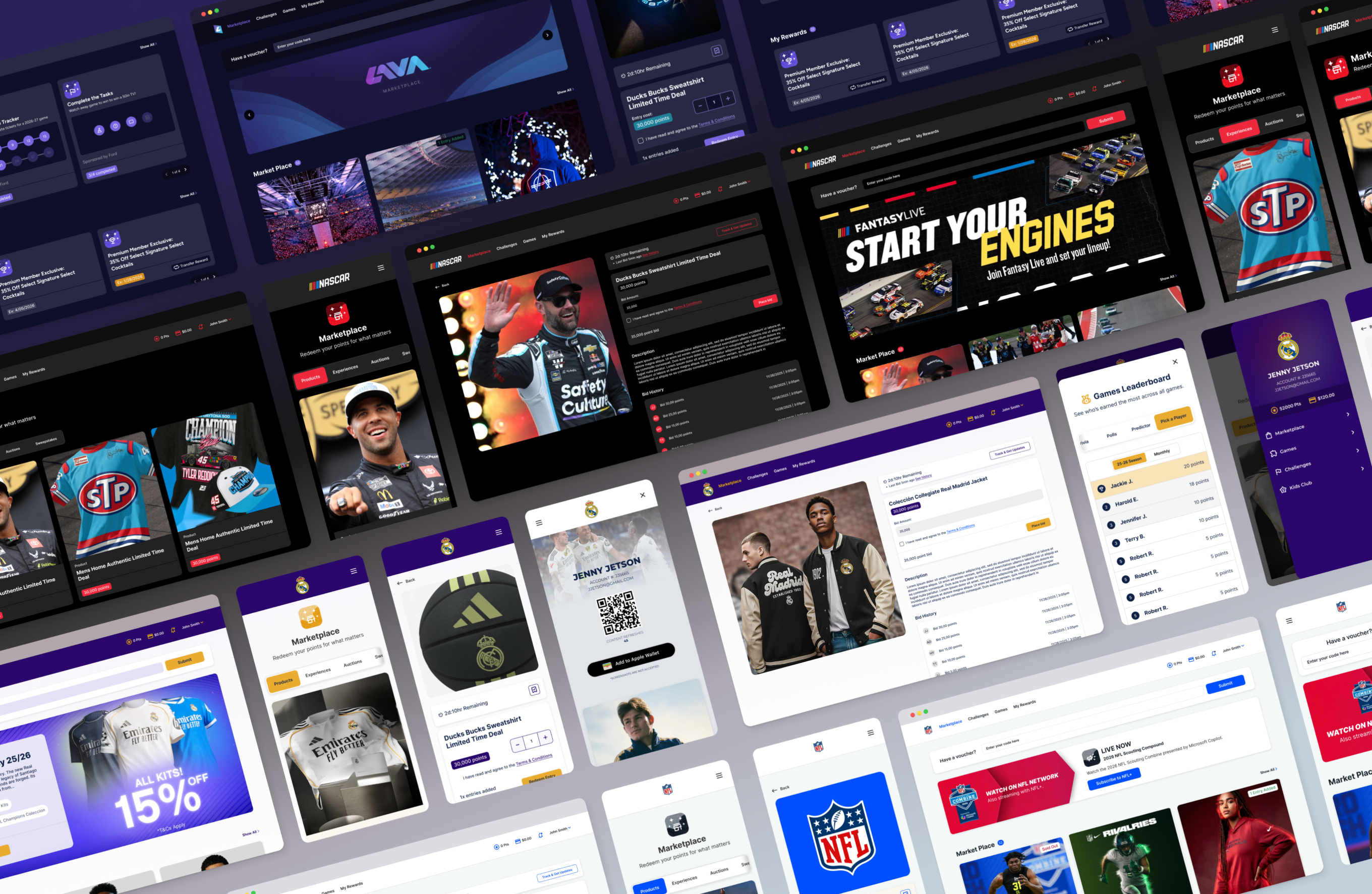
As principal designer at Lava, I own both sides of a rapidly scaling loyalty and engagement platform — the client-facing SaaS admin tools (MAC) and the consumer-facing white-label marketplace. Lava powers event passes, member portals, rewards, games, storefronts, and interactive experiences for sports and enterprise brands including the NFL, NASCAR, Real Madrid, NBA, and PGA Tour. My role sits at the connective tissue between these two sides: building the systems that let one platform serve radically different brands at scale.
The Problem
Every new client meant rebuilding from scratch. Without a scalable system, onboarding a new brand required custom design and configuration work that didn't carry over to the next engagement. The admin tools were dense and hard to navigate, the consumer-facing marketplace lacked a consistent framework for white-labeling, and the design token architecture was bloated — 23 brandable tokens that created fragile configurations and slowed down every launch. Lava needed infrastructure, not just interfaces. The platform was growing fast and the design couldn't keep up solving problems one at a time.
The Approach
Before building anything, I mapped the full landscape of what both sides of the platform needed. The admin tools served internal teams and clients configuring campaigns, rewards, and content. The marketplace served end consumers interacting with those experiences. Understanding where these two sides shared logic and where they diverged was the foundation for every system decision that followed.
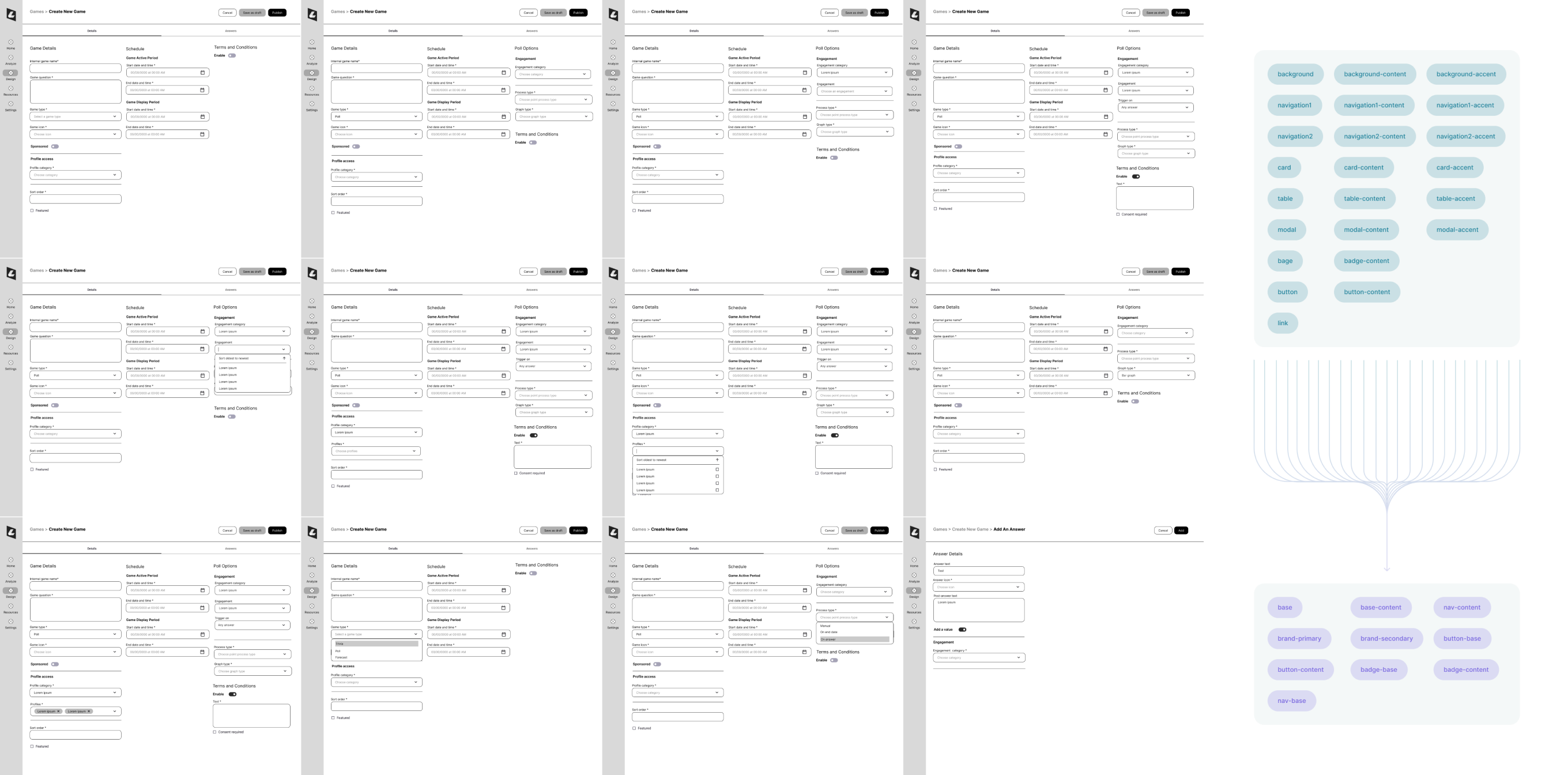
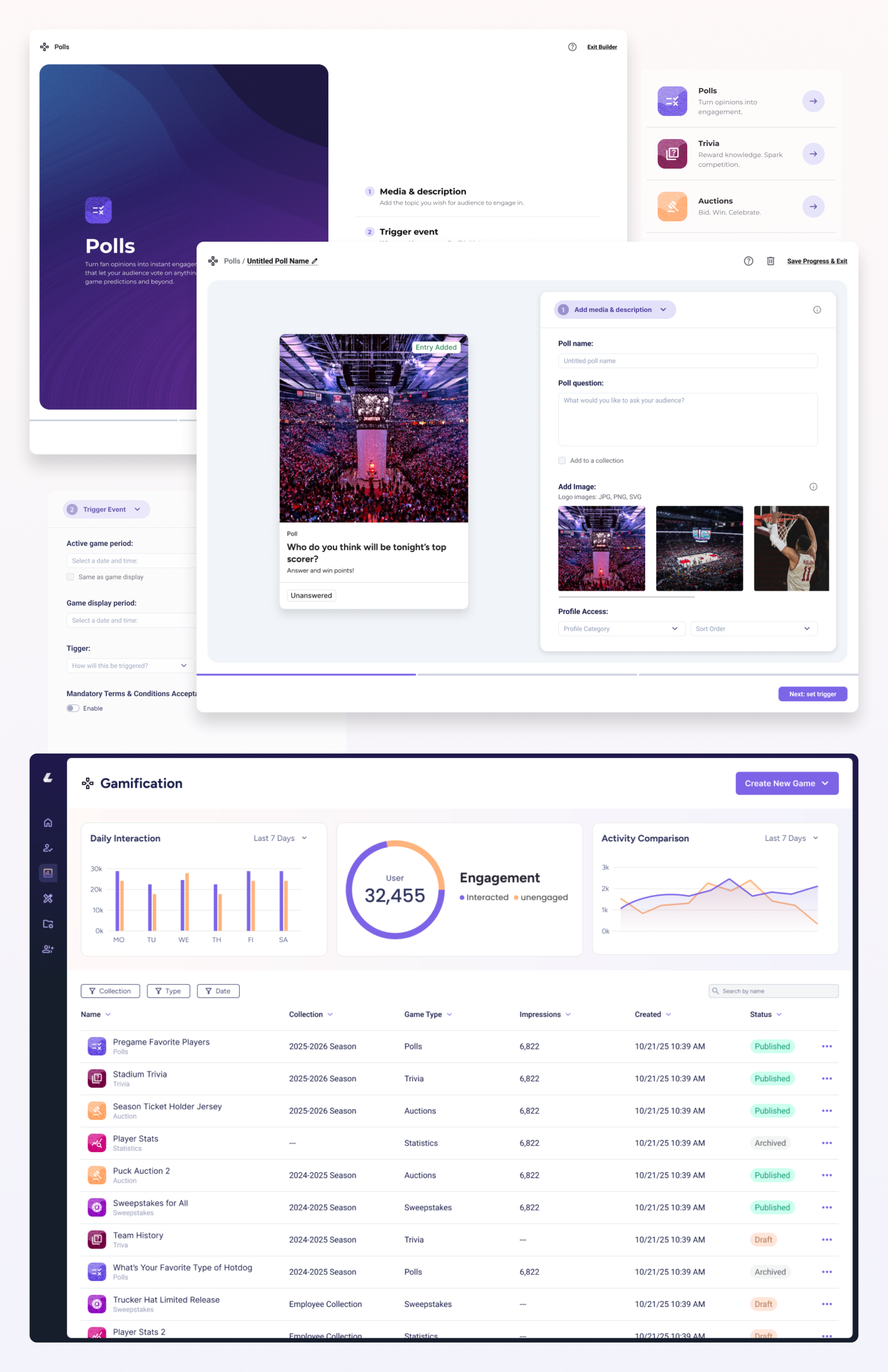
I redesigned the content creation flow around a step-by-step wizard model — breaking complex configurations into manageable stages with clear progress indicators, contextual previews, and inline validation. This pattern reduced onboarding friction for new admin users and made it possible to configure a full branded experience without needing a design background.
Once the wizard pattern proved out for one content type, I extended it across events, rewards, games, storefronts, and member portals. Each content type had unique configuration needs, but the underlying UX framework stayed consistent — so admin users could learn the system once and apply it everywhere. This was critical for reducing support load and training time as Lava scaled its client base.
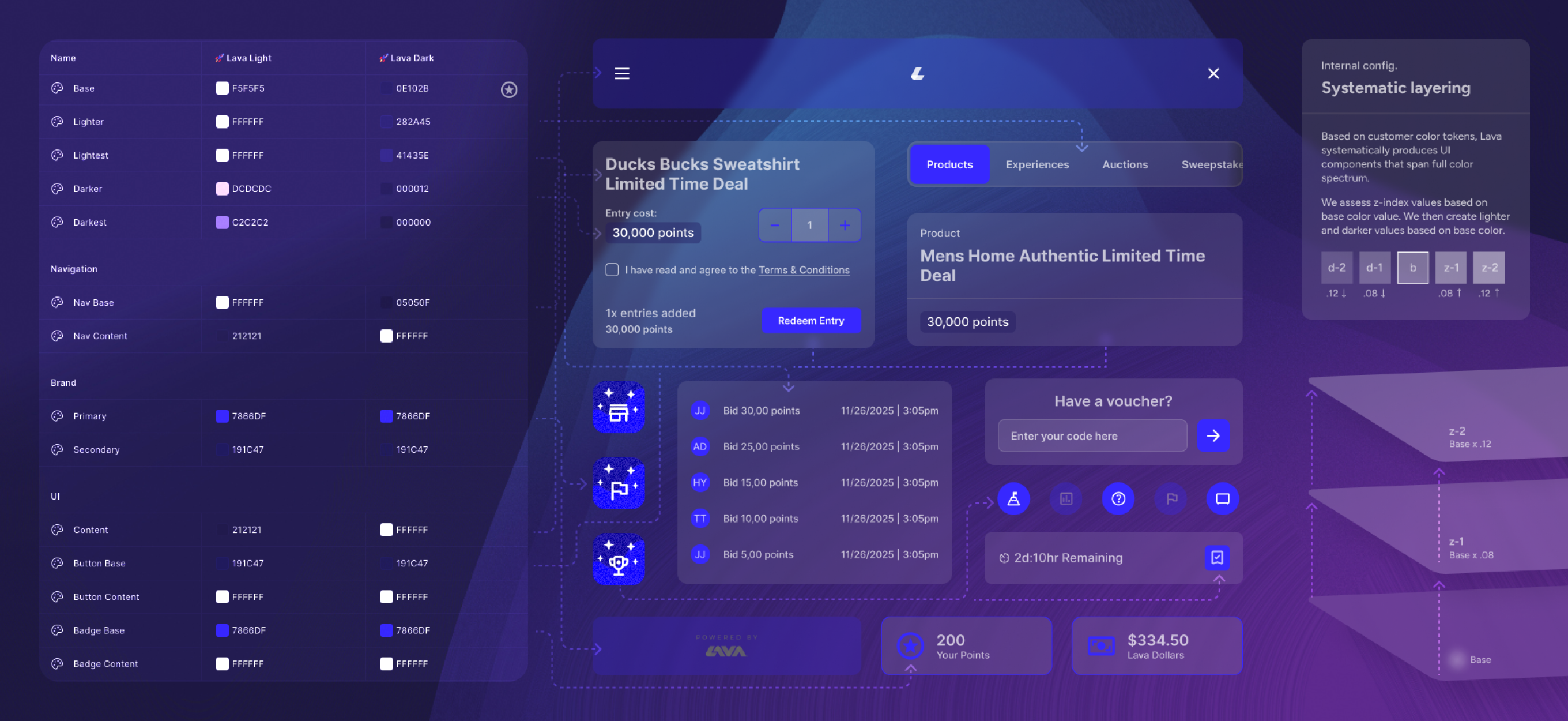
The existing token system had 23 brandable tokens — too many to configure reliably and too fragile to scale. I restructured the architecture down to a lean, intentional set that could express a wide range of brand identities without creating edge cases. This made white-labeling faster, more predictable, and less error-prone for both designers and engineers.
On the consumer side, I designed the white-label marketplace framework — a system that lets each brand feel distinct while running on shared infrastructure. This included flexible layout templates, token-driven theming, and a component library built for variation. The result is that brands like the NFL, NASCAR, and Real Madrid each get a tailored experience without requiring custom design or engineering work.
Challenges
The hardest part was synthesizing qualitative feedback effectively. With stakeholders across sports, entertainment, and enterprise verticals — each with different expectations — it took constant calibration to find the patterns worth acting on versus the one-off requests that would fragment the system. Balancing speed with coherence at scale meant saying no to a lot of good ideas in service of the right ones.
Outcome
The system I built now powers white-label experiences for some of the biggest brands in sports and entertainment — including the NFL, NASCAR, Real Madrid, NBA, and PGA Tour. Admin onboarding time dropped significantly thanks to the wizard pattern, the token architecture went from 23 fragile variables to a lean, scalable set, and the marketplace framework made it possible to launch new branded experiences in a fraction of the time it used to take. This was infrastructure-level design leadership — building the systems that let a platform scale without losing quality or coherence.